
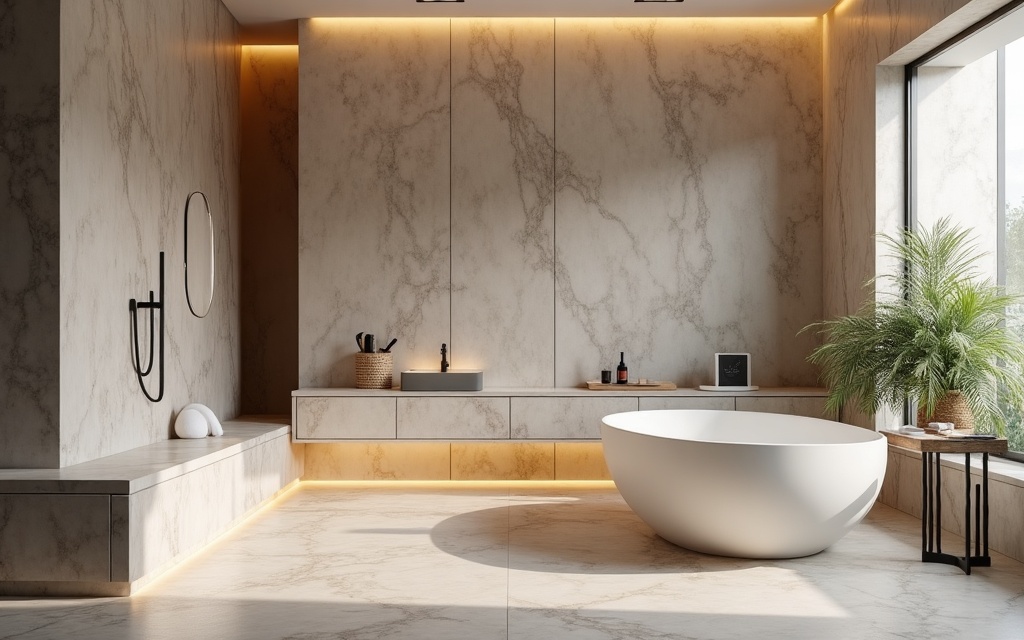
Why Natural Stone Remains the Gold Standard for Bathrooms
Natural stone has been the material of choice for luxury bathrooms for centuries, and 2026 is no exception. Unlike synthetic alternatives, stone brings an authenticity and depth that manufactured materials cannot replicate. Each slab tells a geological story — veins, fossils, and colour variations that make every installation unique. For homeowners seeking a spa-like retreat and architects designing high-end residential projects, natural stone continues to deliver unmatched character and enduring value.
At Atlasia Trading, we have seen a significant increase in demand for bathroom-specific stone specifications over the past year, particularly from markets across Europe, the Middle East, and North America. This guide explores the key trends shaping natural stone bathroom design in 2026.
Large-Format Marble Panels: The Seamless Look
The most prominent bathroom trend for 2026 is the use of large-format marble panels covering entire walls and floors with minimal visible joints. Modern cutting technology now allows slab dimensions of 3200mm × 1600mm and beyond, enabling near-seamless installations that transform a bathroom into a unified stone environment.
Popular Marble Choices for Panels
- Calacatta Viola — Bold purple veining creates dramatic feature walls behind bathtubs
- Mugla White — Clean, consistent white ideal for minimalist Scandinavian-inspired spaces
- Caldia Grey — Sophisticated dark grey with subtle veining for contemporary masculine aesthetics
- Crema Beige — Warm tones that pair beautifully with brass and copper fixtures
Large-format panels reduce grout lines significantly, which means fewer maintenance concerns in wet environments and a more visually cohesive result.
Statement Shower Walls and Wet Rooms
The traditional tiled shower enclosure is giving way to full-height stone shower walls and walk-in wet rooms. Designers are specifying natural stone as the primary wall and floor material throughout the entire shower zone, creating a cohesive, spa-inspired environment.
Material Considerations for Wet Zones
When selecting stone for shower applications, the finish and porosity of the material become critical factors:
- Honed finish provides better slip resistance than polished surfaces
- Dense marble varieties with low water absorption (below 0.5%) are preferred
- Travertine offers excellent slip resistance due to its natural textured surface
- Proper sealing with a high-quality penetrating sealer is mandatory in all wet zones
For shower floors specifically, travertine remains the top choice due to its inherent texture and warmth underfoot, even when wet.
Book-Matched Feature Walls
Book-matching — where two stone slabs are cut from the same block and placed side by side to create a mirror-image pattern — continues to be one of the most requested design techniques in 2026. When applied to a bathroom feature wall behind a freestanding bathtub or vanity, the symmetrical veining creates a visually stunning centrepiece that elevates the entire room.
Turkish marbles such as Calacatta Viola and Silver Breccia are particularly effective for book-matching because of their bold, distinctive veining patterns. The technique works best with polished finishes, where the reflective surface enhances the visual depth of the stone.
Underfloor Heating with Natural Stone
The combination of natural stone flooring with underfloor heating systems has become a standard specification in premium bathroom projects. Stone is an excellent thermal conductor, meaning it absorbs and distributes heat evenly, creating a warm, comfortable surface even in cold climates.
Best Stone Types for Underfloor Heating
- Marble — Excellent heat conductivity; polished or honed finishes both work well
- Travertine — Good heat transfer; honed finish recommended for wet areas
- Limestone — High thermal mass stores heat effectively; ideal for warm climates
- Dolomite — Similar performance to marble with slightly higher density
When installing stone over underfloor heating, it is important to use flexible adhesives and include movement joints to accommodate thermal expansion. A thickness of 20mm is generally optimal — thick enough to provide structural integrity while thin enough for efficient heat transfer.
Freestanding Stone Bathtubs and Vessel Sinks
Carved stone bathtubs and vessel sinks are gaining popularity as statement pieces that combine artistry with functionality. Solid stone tubs carved from a single marble or travertine block create an extraordinary focal point that no acrylic or composite alternative can match.
While these pieces represent a significant investment, they offer exceptional durability — a stone bathtub will outlast the building it is installed in. Turkish marble quarries produce some of the finest bathtub-grade blocks, with the Mugla and Afyon regions supplying large, clean blocks ideal for carving.
Earth-Toned Palettes and Organic Finishes
The broader design trend toward biophilic interiors — spaces that connect occupants with nature — is driving demand for warm, earth-toned stone varieties and organic surface finishes in bathrooms.
Trending Colour Palettes
- Warm beiges and creams — Crema Beige, Capri Limestone, and antique travertine
- Soft greys — Caldia Grey, Tundra Grey, and silver travertine
- Earth tones with character — Noce Travertine and warm brown marbles
- Statement contrasts — White marble paired with dark stone accents
Textured finishes such as brushed, leathered, and split-face are increasingly specified for accent walls and niches, adding tactile dimension alongside the visual richness of the stone.
Technical Tips for Bathroom Stone Installation
Successful bathroom stone installations require attention to several technical factors that go beyond simple material selection:
- Waterproofing — Apply a liquid waterproof membrane beneath stone installations in shower and wet zones
- Sealing schedule — Apply penetrating sealer before installation, after grouting, and annually thereafter
- Grout selection — Use epoxy grout in wet zones for maximum stain and water resistance
- Expansion joints — Include perimeter and field joints to accommodate thermal and moisture movement
- Maintenance — Use pH-neutral stone cleaners only; avoid vinegar, bleach, and acidic products
Working with an experienced stone supplier who can provide technical documentation and installation guidance is essential for achieving the best results. At Atlasia Trading, we supply natural stone for bathroom projects worldwide with full quality assurance and specification support.
Conclusion: Elevate Your Bathroom with Natural Stone
Natural stone continues to define luxury bathroom design in 2026, with trends favouring larger formats, bolder patterns, and more integrated stone environments. Whether you are an architect specifying materials for a hotel spa or a homeowner planning a bathroom renovation, Turkish natural stone offers the variety, quality, and value that transforms ordinary bathrooms into extraordinary retreats.
Ready to explore premium natural stone for your next bathroom project? Contact our team for slab availability, technical specifications, and competitive FOB pricing. Browse our complete collections of marble, travertine, and limestone to find the perfect stone for your vision.