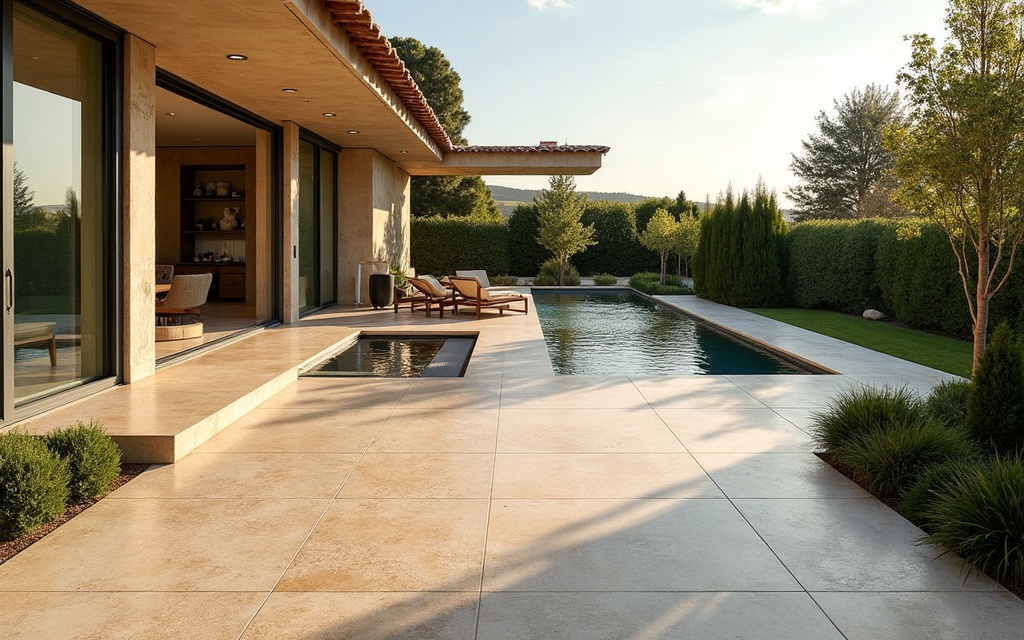
Choosing the Right Material for Outdoor Living
When designing an outdoor patio, pool deck, or garden terrace, the choice between natural travertine stone and porcelain tile is one of the most important decisions you will face. Both materials are popular among architects, builders, and homeowners, but they differ dramatically in appearance, performance, and long-term value. This guide breaks down everything you need to know to choose the right material for your outdoor project.
What Is Travertine?
Travertine is a natural limestone deposited by mineral springs, particularly hot springs. It has been used in architecture for thousands of years — the Colosseum in Rome is built almost entirely from travertine. Available in warm tones ranging from ivory and gold to walnut and rust, travertine brings an organic, earthy beauty that is impossible to replicate with manufactured materials.
Key Characteristics of Travertine
- Natural beauty: Each tile is unique with distinct veining, colour variation, and character
- Stay-cool surface: Travertine remains comfortable underfoot even in direct sunlight — a critical advantage for pool decks and barefoot areas
- Natural porosity: Its textured, slightly porous surface provides excellent slip resistance when wet
- Exceptional durability: With proper sealing, travertine can last for decades outdoors
- Thermal mass: Absorbs heat slowly and releases it gradually, moderating surface temperature
What Is Porcelain Tile?
Porcelain tile is a manufactured ceramic product fired at extremely high temperatures (around 1,200–1,400°C). Modern outdoor porcelain tiles are designed to mimic natural stone, wood, and other materials, often with digital printing technology that creates convincing visual replicas.
Key Characteristics of Porcelain Tile
- Uniform appearance: Consistent colour and pattern across all tiles — predictable and repeatable
- Low water absorption: Rated for outdoor use with absorption rates below 0.5%
- High compressive strength: Extremely resistant to cracking and impact damage
- Low maintenance: Does not require sealing; resistant to stains, mould, and chemicals
- Lightweight options: Available in thinner profiles than natural stone
Head-to-Head Comparison
Aesthetics
Travertine offers unmatched natural beauty with warm, organic tones that vary from piece to piece. No two travertine patios look the same. Porcelain tiles, while technically capable of reproducing stone patterns through digital printing, often lack the depth, translucency, and tactile quality of real stone. For luxury residential projects where visual impact matters, travertine delivers a premium feel that porcelain struggles to match.
Safety and Slip Resistance
Travertine's natural porosity gives it excellent slip resistance, especially when a filled and honed or tumbled finish is used. This makes it one of the safest options for pool decks and wet areas. Porcelain tiles can be textured for slip resistance, but the texture is typically uniform and may not perform as consistently, especially when algae or debris accumulates.
Heat Performance
One of travertine's greatest advantages for outdoor use is its naturally cool surface temperature. In hot climates, travertine can be 5–10°C cooler than porcelain or concrete under direct sun. For homeowners in Mediterranean, Middle Eastern, or tropical climates, this translates directly into a more comfortable outdoor experience.
Durability and Weathering
Both materials perform well outdoors. Travertine, when properly sealed and installed, can endure freeze-thaw cycles, UV exposure, and heavy foot traffic for decades. Porcelain is virtually impervious to moisture and frost damage. However, travertine may develop a natural patina over time that many homeowners find attractive, while porcelain maintains a consistent factory finish — which some find sterile and others prefer.
Installation and Cost
Porcelain is generally easier and faster to install due to its uniform thickness and predictable cutting behaviour. Travertine requires more careful handling — the natural stone is heavier, thicknesses vary between pieces, and special attention is needed for substrate preparation and drainage. In terms of material cost, high-quality outdoor porcelain is often comparable to or more expensive than mid-range travertine. However, when factoring in installation labour, travertine projects may cost 15–30% more overall.
When to Choose Travertine
- Pool decks and areas with barefoot traffic — the cool surface and natural grip are unbeatable
- Luxury residential projects — nothing matches the natural warmth and prestige of real stone
- Mediterranean and warm-climate designs — travertine complements this architectural style perfectly
- Projects where character matters — the natural variation adds visual depth and uniqueness
- Long-term investment properties — natural stone adds measurable resale value
When to Choose Porcelain Tile
- High-traffic commercial areas — extreme durability and low maintenance are priorities
- Projects on a tight budget — lower installation costs and predictable material pricing
- Rooftop terraces — lighter weight reduces structural requirements
- Modern, minimalist designs — uniform appearance suits contemporary aesthetics
- Areas with harsh freeze-thaw cycles — porcelain's near-zero water absorption eliminates frost risk
Maintenance Comparison
Travertine requires periodic sealing (every 1–2 years for outdoor applications) to protect against staining and water absorption. Cleaning involves pH-neutral stone cleaners and gentle scrubbing. Porcelain, by contrast, needs only routine cleaning with standard detergents and requires no sealing. For property managers or homeowners who prefer minimal upkeep, porcelain has a clear advantage.
The Trade-Off
However, the maintenance of travertine is often overstated. A quality penetrating sealer applied correctly can provide 2–3 years of protection, and the sealing process is straightforward. The slight additional maintenance is a small price for the aesthetic and performance benefits — especially the cooler surface temperature and natural slip resistance.
The Verdict: Natural Stone Endures
For outdoor living spaces where beauty, comfort, and long-term value matter, travertine remains the superior choice. Its natural coolness underfoot, unique aesthetic character, and proven durability across millennia of architectural use make it the preferred material for discerning homeowners and architects. Porcelain tile is an excellent practical choice for specific applications — particularly commercial settings and rooftop installations — but for the premium outdoor experience that defines luxury residential design, natural stone stands apart.
At Atlasia Trading, we source premium Turkish travertine directly from quarries in Denizli, offering a wide selection of colours, finishes, and sizes for outdoor projects. Browse our travertine collection or contact our team to discuss your next outdoor project.